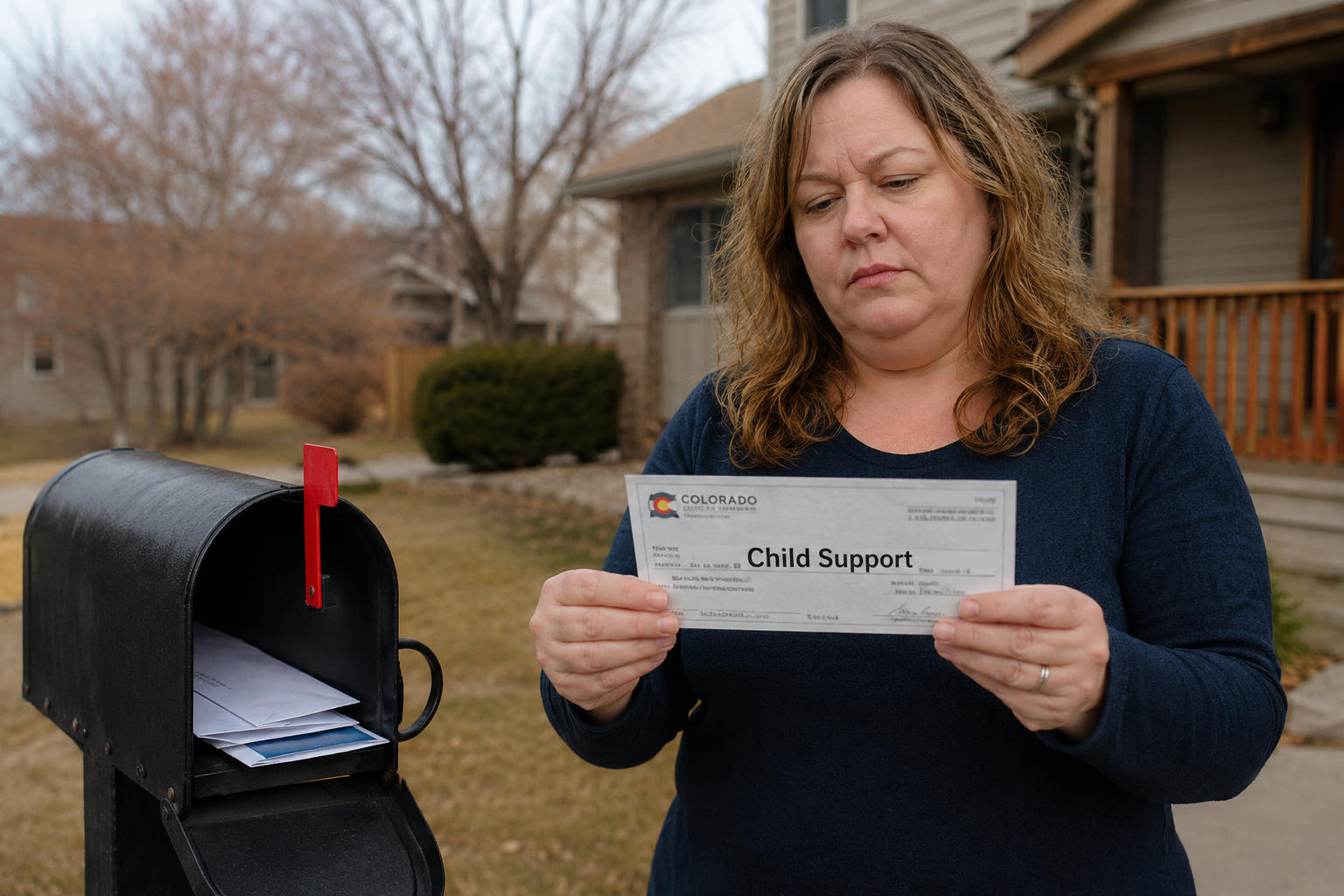
WHEN CHILD SUPPORT IS ON THE LINE, LOCAL DETAILS MATTER
Child support can be one of the most important issues in a family law case. It affects your child’s daily life, your household budget, and the way both parents share financial responsibility after separation, divorce, or a custody case. When you live in Woodland Park or elsewhere in Teller County, the numbers are only part of the story.
Families in this area may deal with mountain commutes, school schedules, seasonal income, self-employment, shared parenting time between Teller County and Colorado Springs, and changing childcare needs. Those facts can make a child support case more complicated than a simple calculator result. The right attorney should understand both Colorado child support law and the local realities that shape your family’s financial plan.
This article explains what child support means in Colorado, how support cases commonly arise, what Moran, Allen & Associates Family Law can help families evaluate, what documents may matter, and what practical steps you can take before a negotiation, mediation, or court hearing. This information is general education, not legal advice for your specific situation. Your case should be reviewed directly with an attorney who can evaluate your facts, documents, deadlines, and court orders.
PLAIN-ENGLISH OVERVIEW OF CHILD SUPPORT IN WOODLAND PARK AND TELLER COUNTY
Child support is money paid to help cover a child’s needs when parents are separated, divorced, unmarried, or living under a court-ordered parenting arrangement. In Colorado, both parents generally have a duty to support their children. The court looks at income, parenting time, certain child-related expenses, and other legally relevant information to determine support.
In a Woodland Park family law case, child support may arise during divorce, allocation of parental responsibilities, paternity, modification, enforcement, or protection order-related parenting disputes. It may also come up when one parent changes jobs, a child’s schedule changes, childcare costs increase, or health insurance coverage changes. Even when parents agree on parenting time, child support still needs to be calculated carefully.
The goal is not to punish one parent or reward the other. The goal is to create a support order that helps meet the child’s needs and reflects the financial realities of both households. A child support attorney can help you understand what information matters, how the numbers may be calculated, and what questions need to be answered before you agree to an order.
WHY THE RIGHT FAMILY LAW ATTORNEY OR CHILD SUPPORT ATTORNEY MATTERS
Many parents start by looking for a quick number. They may use an online calculator, ask a friend, or assume support will be based only on who has more overnights. Those starting points can be helpful, but they often miss important details.
Child support may be affected by gross income, adjusted income, childcare expenses, health insurance costs, extraordinary medical costs, parenting time, other children, spousal maintenance, and whether a parent is voluntarily unemployed or underemployed. If one parent owns a business, works seasonal hours, receives bonuses, or has cash income, the income analysis may require more detail. A child support attorney should know how to identify those issues before a number is treated as final.
Moran, Allen & Associates Family Law represents families in the region in matters that can involve divorce, child custody, child support, paternity, domestic violence, and related family law issues. The firm’s family law services page describes the broader family law matters that can overlap with support disputes. That broader perspective matters because child support is rarely isolated from parenting time, decision-making, divorce terms, or safety concerns.
HOW COLORADO LAW TREATS CHILD SUPPORT
Statutory guidelines generally govern Colorado child support. Those guidelines are designed to provide a structured method for calculating support based on financial information and the parenting arrangement. The Colorado child support statute and guidelines include what courts use to evaluate support obligations.
The Colorado Judicial Branch also provides a support calculation resource for people who want to estimate child support or maintenance. The calculator can be useful, but the output depends on the accuracy of the information entered. If income, overnights, insurance costs, childcare costs, or other inputs are wrong, the result may also be wrong.
A court may also need to decide disputes about income, job capacity, daycare expenses, health insurance, extraordinary expenses, and whether the guideline calculation should be adjusted. That is where legal guidance can become important. An attorney can help you understand what the calculator does and does not decide, and what evidence may be needed if the other parent disputes the numbers.
WHO CHILD SUPPORT APPLIES TO
Child support can apply to married parents, divorced parents, unmarried parents, and parents who are involved in a paternity or allocation of parental responsibilities case. It can also apply when parents share parenting time or when one parent has most of the overnights. The obligation is tied to the child, not the parents’ relationship status.
Support may be addressed in a divorce if the parents are ending a marriage. In that situation, child support may be connected to property division, maintenance, and parenting time. The firm’s Colorado Springs divorce lawyers page discusses divorce issues that often intersect with child-related financial matters.
Support may also be addressed in a custody case involving unmarried parents. In Colorado, custody-related orders are usually referred to as the allocation of parental responsibilities. The firm’s child custody page discusses parenting issues that may affect support, including parenting time and decision-making responsibility.
WHY TELLER COUNTY CHILD SUPPORT CASES CAN BE UNIQUE

Teller County families often deal with practical issues that affect child support and parenting arrangements. A parent may live in Woodland Park while working in Colorado Springs, Divide, Cripple Creek, Denver, or along the Front Range. A child may attend school in one county while spending significant time in another household.
Travel time, weather, and school logistics may influence parenting schedules. Parenting schedules can influence the support calculation because overnights are part of the financial picture. A schedule that looks fair on paper may not be realistic if it creates long school-day drives or makes exchanges unreliable in winter weather.
Income can also be more complicated than it first appears. Some parents work in construction, tourism, trades, government, public safety, health care, self-employment, remote work, or seasonal industries. A child support attorney should ask careful questions about income patterns, not just look at one recent paycheck.
WHAT MORAN, ALLEN & ASSOCIATES CAN REVIEW IN A CHILD SUPPORT CASE
A strong child support review starts with accurate information. Your attorney should look at income, parenting time, expenses, existing orders, and any facts that may affect the guideline calculation. That review should happen before you agree to a number or sign proposed orders.
Important documents may include pay stubs, tax returns, W-2 forms, 1099 forms, business records, bank statements, daycare invoices, health insurance premium information, medical expense records, and proof of parenting time. If there is already a court order, your attorney should review the current order, payment history, and any later agreements between the parents.
If one parent claims they cannot pay, the analysis should go deeper. The court may need to understand whether income changed for a legitimate reason, whether the parent is working below capacity, or whether income is being hidden or understated. A careful review can help separate real hardship from incomplete disclosure.
INCOME IS OFTEN THE FIRST MAJOR ISSUE
Child support usually starts with each parent’s income. For a W-2 employee with steady pay, that may be relatively straightforward. For self-employed parents, business owners, gig workers, seasonal workers, commission-based employees, or parents with irregular income, the analysis may be more complicated.
Income may include wages, salary, bonuses, commissions, self-employment earnings, certain benefits, and other sources depending on the facts. Business income may require review of revenue, expenses, deductions, bank deposits, tax returns, and the appropriateness of claimed business expenses for child support purposes. A tax return may not tell the full story by itself.
If income is disputed, documentation matters. Pay records, tax filings, profit and loss statements, business bank records, invoices, contracts, and employment history may all become relevant. Your attorney should help identify what information is missing and how to request or present it.
PARENTING TIME CAN AFFECT THE CALCULATION
Parenting time affects more than the child’s schedule. It can also affect child support because the number of overnights may be part of the guideline calculation. This is one reason support and custody issues often need to be reviewed together.
Parents should avoid creating a parenting plan only to change support. The parenting schedule should first serve the child’s best interests, school routine, safety, and relationship with each parent. Once the parenting schedule is realistic, child support can be calculated using accurate overnight information.
For Woodland Park families, the schedule should also account for transportation, school-day routines, weather, extracurricular activities, medical appointments, and exchange reliability. A support order based on an unrealistic schedule may create future problems with modification or enforcement.
CHILDCARE, HEALTH INSURANCE, AND MEDICAL EXPENSES MATTER
Child support is not based only on income and overnights. Childcare costs, health insurance costs, and certain medical expenses can affect the calculation. These costs should be documented clearly.
Childcare expenses may include daycare, after-school care, summer care, or other work-related childcare costs. Health insurance may need to be reviewed to determine the cost attributable to the child, not just the total family premium. Unreimbursed medical, dental, vision, therapy, or special-needs expenses may also require attention.
If these costs change, support may need to be reviewed. A parent who loses insurance, starts paying childcare, stops paying childcare, or faces new medical expenses should not rely on assumptions. Written documentation and timely legal review can help prevent disputes.
CHILD SUPPORT ISSUES AT A GLANCE
| Child Support Issue | What It Means In Plain English | Documents Or Evidence That May Matter |
|---|---|---|
| Parent Income | The court needs reliable income information for both parents. | Pay stubs, tax returns, W-2s, 1099s, business records, bank statements, and employment history. |
| Parenting Time | The number of overnights may affect the support calculation. | Parenting plan, school calendar, exchange records, actual overnight logs, and prior orders. |
| Childcare Costs | Work-related childcare may be part of the calculation. | Daycare invoices, receipts, provider information, summer care costs, and payment records. |
| Health Insurance | The child’s share of health insurance may affect support. | Insurance premium breakdowns, employer benefit statements, policy details, and proof of payment. |
| Unusual Or Variable Income | Support may be harder to calculate when income changes month to month. | Bonus records, commission history, profit and loss statements, contracts, and multiple years of tax records. |
| Modification Or Enforcement | Support may need to change, or an existing order may need to be enforced. | Current order, payment history, income changes, expense changes, messages, and court records. |
PRACTICAL STRATEGIES AFTER YOU UNDERSTAND THE NUMBERS
Once the basic child support issues are clear, the next step is to develop a strategy. You should not walk into mediation or court with only a rough estimate. You should understand the inputs, the disputed facts, and what evidence supports your position.
Start by organizing your financial records by category. Keep income documents separate from childcare receipts, insurance documents, medical expenses, and parenting-time records. A clean file helps your attorney evaluate the case more quickly and reduces the risk of missing something important.
You should also create a short list of disputed issues. For example, the dispute may be over a parent’s true income, the number of overnights, whether childcare costs are reasonable, whether health insurance is properly counted, or whether an existing order should be modified. Clear issue-spotting makes negotiation more productive.
COMMON MISTAKES TO AVOID IN A CHILD SUPPORT CASE
One common mistake is relying on informal payment arrangements. Cash payments, verbal agreements, and undocumented transfers can create problems later. If support is court-ordered, payment records should be clear and traceable.
Another mistake is guessing at income. If a parent is self-employed or has variable pay, a single paycheck or a single month of deposits may not tell the full story. Support should be based on reliable financial information, not assumptions or frustration.
A third mistake is ignoring parenting time. The support calculation may depend in part on the parenting schedule, but the schedule should still be based on the child’s best interests. Parents who use parenting time only as a support strategy may create conflict and credibility problems.
WHEN CHILD SUPPORT COMES UP DURING DIVORCE
In divorce, child support is usually one part of a larger case. The same family may also be dealing with property division, debts, maintenance, parenting time, decision-making responsibility, retirement accounts, tax issues, and the marital home. Those issues can affect each other.
For example, maintenance may affect available income. Parenting time affects support. Who pays health insurance or childcare may affect the final calculation. A divorce settlement should be reviewed as a complete financial plan, not a collection of disconnected terms.
Your attorney should help you understand how the support order fits into the larger divorce agreement. That includes when payments start, how they are made, how expenses are shared, how tax issues are handled, and what happens if income or parenting time changes later.
WHEN CHILD SUPPORT COMES UP IN A CUSTODY CASE
For unmarried parents, child support may be addressed in a parental responsibility or paternity-related case. The court may need to determine parenting time, decision-making responsibility, support, and possibly past support. These issues can become emotional because they affect both access to the child and financial responsibility.
The Colorado Judicial Branch provides parenting plan and APR forms for cases involving allocation of parental responsibilities. These forms are important because parenting time and child support are often evaluated together. A parenting plan should be specific enough to facilitate support calculations and future enforcement.
If parents disagree about the actual schedule, support can also become a point of dispute. A parent may claim overnights are not happening or deny time that has been consistently exercised. Records, calendars, school information, and written communication may help show what is really occurring.
MODIFICATION OF CHILD SUPPORT
A child support order may need to be modified if circumstances change. Common reasons include a significant income change, a change in parenting time, new childcare costs, loss of health insurance, a change in the child’s needs, or another legally relevant financial change. A modification should be handled through the proper legal process.
Parents sometimes assume they can reduce payments on their own when they lose a job or experience a financial setback. That can be risky. Until the court changes the order, the existing order may continue to control.
If you believe support should change, gather documents quickly. Pay changes, termination paperwork, new employment records, medical expense records, childcare invoices, and parenting-time changes may all matter. Early review can help you understand whether a modification request is realistic and what timing issues apply.
ENFORCEMENT OF CHILD SUPPORT ORDERS
If a parent is not paying court-ordered child support, enforcement may be necessary. Enforcement may involve payment records, wage withholding, contempt proceedings, arrears, interest, and other remedies, depending on the facts. The right path depends on the order and the payment history.
The Colorado Judicial Branch maintains self-help forms for many family law matters, including those relevant to support-related court processes. Forms can help people understand the paperwork, but enforcement strategy often benefits from legal review. Mistakes in enforcement filings can slow the process or distract from the strongest facts.
If you are trying to enforce support, organize the payment history first. Gather the current order, payment ledger, bank records, wage withholding information, and any messages about missed payments. Clear documentation can help show the court what is owed and what has happened.
WHAT IF YOU ARE ACCUSED OF NOT PAYING SUPPORT?
If you are accused of failing to pay child support, do not ignore the issue. Missed support can lead to serious consequences, especially if a court believes a parent could pay and has failed to comply. You should review the order, payment records, and any reasons payments were missed.
Sometimes the dispute is about recordkeeping. A parent may have paid directly, paid in cash, covered expenses instead of paying through the ordered method, or misunderstood what the order required. Those facts need documentation.
If your income has changed, you may need to seek a modification rather than explain nonpayment after the fact. The court will usually care about whether you followed the existing order and whether you took proper steps when circumstances changed. Legal guidance can help you respond with documents instead of panic.
SAFETY CONCERNS AND SUPPORT ISSUES CAN OVERLAP
Some support cases also involve protection orders, domestic violence, harassment, or safety concerns. These issues can affect communication, exchanges, parenting time, and financial discussions. Support should not be used as a tool of control or intimidation.
If safety is involved, direct negotiation may not be appropriate. Parenting exchanges, payment methods, and communication may need structure. The firm’s protection order lawyers page discusses protective order issues that may intersect with family law cases.
Documentation matters in these situations. Keep copies of court orders, police reports, messages, payment records, and any evidence showing threats or coercive conduct. Safety concerns should be addressed carefully and through proper legal channels.
HOW MEDIATION FITS INTO CHILD SUPPORT CASES
Mediation can be useful when parents disagree about support but are willing to exchange information and negotiate. A mediator does not represent either parent and does not replace legal advice. The mediator helps the parties discuss possible agreements.
Before mediation, you should know the support inputs and the disputed issues. Bring income records, childcare records, insurance information, parenting-time information, and any proposed calculations. If one parent has not disclosed enough information, mediation may need to focus first on what documents are missing.
A good child support attorney can help you prepare for mediation by identifying reasonable settlement options and limits. The goal is not to accept the first number offered. The goal is to make informed decisions based on accurate information.
WHAT TO EXPECT IN A CHILD SUPPORT HEARING
If parents cannot agree, the court may hold a hearing. At a hearing, each side may present testimony, documents, and arguments about the proper support amount. The court may need to decide income, overnights, childcare costs, insurance costs, arrears, or modification issues.
Preparation is essential. You should know what exhibits you need, what witnesses may be helpful, and how to explain the numbers. Organized financial records will help a judge or magistrate more than broad accusations.
Your attorney should help you understand what the court is being asked to decide. A support hearing may be narrow or may overlap with parenting and financial issues. Knowing the exact issues helps keep the presentation focused.
WHY EARLY CASE REVIEW CAN MAKE A DIFFERENCE
Early review can prevent avoidable mistakes. Before you agree to support, change payment methods, stop paying, sign a parenting plan, or rely on an informal deal, it is wise to understand the legal effect. What feels practical today may create a problem later.
The firm’s child support lawyer page discusses child support representation for Colorado families. You can also use the firm’s free consultation page to begin a case review and discuss possible next steps. Early guidance can help you gather the right documents and avoid reacting under pressure.
Child support is too important to guess. Whether you expect to pay support, receive support, modify support, or enforce an order, a clear review can help you understand your position. It can also help you build a practical plan for your child and your household.
FREQUENTLY ASKED QUESTIONS ABOUT CHILD SUPPORT IN WOODLAND PARK, COLORADO
HOW IS CHILD SUPPORT CALCULATED IN COLORADO?
Colorado child support is generally calculated using guideline factors that may include each parent’s income, parenting time, childcare costs, health insurance, and certain child-related expenses. The calculation depends on accurate inputs. If income or parenting time is disputed, the court may need evidence before deciding support.
DO I NEED A CHILD SUPPORT ATTORNEY IF WE AGREE ON PARENTING TIME?
You may still benefit from legal review because parenting time is only one part of the calculation. Income, childcare, insurance, medical costs, and other factors may still affect support. An attorney can help confirm whether the proposed number is based on complete and accurate information.
CAN CHILD SUPPORT BE CHANGED LATER IN TELLER COUNTY?
Child support may be modified when legally significant circumstances change. Common reasons include changes in income, parenting time, childcare expenses, health insurance, or the child’s needs. You should not assume an informal agreement changes the court order.
WHAT DOCUMENTS SHOULD I BRING TO A CHILD SUPPORT CONSULTATION?
Bring pay stubs, tax returns, W-2s, 1099s, bank statements, childcare bills, health insurance information, medical expenses, parenting schedules, and any existing court orders. If you are self-employed, bring business records and profit-and-loss information. More complete records usually lead to a more useful consultation.
WHAT HAPPENS IF THE OTHER PARENT IS HIDING INCOME?
If you believe income is being hidden or understated, documentation becomes important. Bank records, business records, tax returns, spending patterns, employment history, and discovery may help clarify the true financial picture. A child support attorney can help identify what information may be needed.
Can child support and custody be handled together?
Yes. Child support and parenting time are often handled in the same family law case. Parenting time can affect support, and support orders should fit the actual parenting arrangement. Both issues should be reviewed together so the final orders are clear and workable.
CHILD SUPPORT DECISIONS DESERVE CAREFUL ATTENTION
Child support affects your child, your budget, and your long-term family stability. In Woodland Park and Teller County, support cases can involve unique local facts, including travel, parenting schedules, seasonal income, self-employment, and school logistics. Those details should be reviewed carefully before a support number is treated as final.
Moran, Allen & Associates Family Law can help families understand how child support fits into divorce, custody, modification, enforcement, and broader family law matters. A strong case starts with accurate information, organized documents, and a realistic understanding of the legal process. You do not need to have all the answers before asking for help.
If child support is part of your family law case, early review can help you avoid mistakes and prepare for negotiation, mediation, or court. The right legal guidance can help you focus on what matters most: your child’s needs, your financial responsibilities, and a workable path forward.